As a freelance illustrator one of my specialties is character design. I periodically get calls from business owners who want a custom mascot to help promote their product or service. I’ve designed mascots for several companies and even designed the refresh of Mr. Monopoly for Hasbro’s updated version of the classic board game.
Not every brand needs a mascot, but in many industries a mascot can create strong advantages. Here’s how to consider whether or not a mascot is right for you…
Mascots are powerful, which is why so many companies use them (M&M’s, Disney, Geico, Mr. Clean, and Planters Peanuts just to name a few). Having a character or mascot to represent you in front of the public can have several advantages:
Mascots stand out from the noise and get noticed. When people see a mascot they are more likely to pause and listen to what he/she/it has to say.
Human beings are naturally wired to recognize and remember faces. If an appealing character can work its way into the public consciousness it will become an instantly recognizable symbol for a product. When you look at the Geico gecko you immediately think of Geico. You see the Pillsbury dough boy and think of gooey chocolate chip cookies.
Some businesses can feel intimidating or overly corporate without meaning to. Mascots help break the ice. They are entertaining to watch and send a positive message. A likable character can instantly create a positive connection with your potential customers.
A good mascot can appeal to a wide demographic, across many age groups and backgrounds. Mascots appeal to children as well as adults, extending your brand message to a wider audience. A mascot can even transcend languages and cultures.
Some mascots become valuable far beyond advertising. If a mascot becomes popular it opens the door for all sorts of profitable merchandise (clothing, toys, etc.) that can make you money while at the same time raising awareness of your product. The best mascots stop feeling like marketing and start feeling like part of pop culture.
Having said that, not every business needs a mascot. Here are some points to help you figure out whether one actually makes sense for your brand…
Does everyone in your industry feel too similar? When five companies in an industry all use the same clean corporate look, a memorable character can instantly stand apart. A mascot gives you a unique “face” people notice and remember.
Mascots can be warm and friendly. They humanize your brand. People like mascots. They help build a sense of loyalty.
Children love mascots! Adults tend to like them too. Industries that people are normally not warm to such as finance, healthcare, tech, etc. can benefit from a mascot. A playful character can make cold or intimidating subjects feel warmer and more approachable.
If you are in an industry that the general public normally considers bland, a lively mascot can create a sense of friendliness, humanity, and warmth. Mascots make brands feel more human. They can add humor, energy, friendliness, or even a little attitude depending on the brand.
Your product or service might be the perfect solution to a complex problem. But how do you get people to understand or care? A friendly mascot can build trust and likability.
Mascots can be durable. A strong mascot can adapt and evolve over time while still carrying your brand into the next generation. There’s a reason people remember the mascot from a cereal they ate 25 years ago.
If you already have a logo or a “look” that people instantly recognize and love, a mascot might be overkill. There is a risk it could clutter up or water down that identity.
Mascots are fun and playful. If your brand is about elegance or simplicity, a mascot might undercut that message.
Some industries (such as law, high finance, or certain medical fields) rely heavily on trust and professionalism. A mascot could undermine credibility.
If your customers are buying something that relies heavily on personal trust and real-world results (such as skincare, real estate, professional services, etc.), a mascot (though entertaining) could distract from your intended message.
I have experience designing several characters and mascots for brands and businesses, including Hasbro and VeggieTales. I understand the importance of a strong design that is eye-catching and has personality.
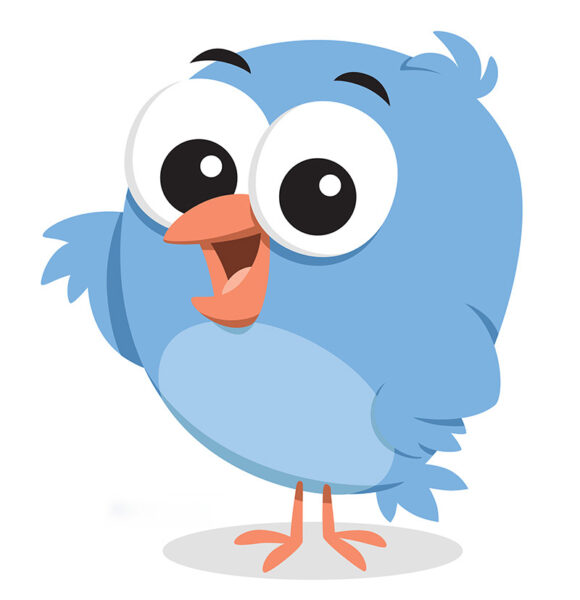
A mascot is a symbol of your company. It’s an investment! So we want to take the time to get it just right. Below are the basic steps. To help illustrate I’m also including some examples from a bluebird mascot I designed for a music education company:
I’ll start by learning about your brand, your goals, and how you plan to use the mascot. I’ll also do research on your industry, target audience, and competition. On my website I’ve even got a free questionnaire designed to help you think through what your brand is saying, and to help me understand your needs so we start on the same page.
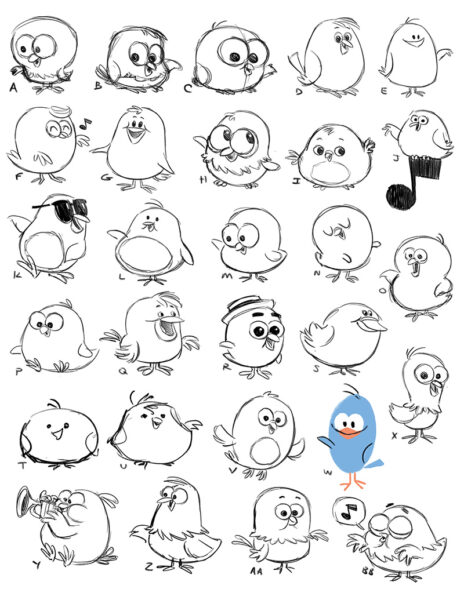
After we’ve discussed your strategy, I’ll begin with several very loose, very rough doodle sketches. This is NOT meant to be final art. It’s a quick and efficient way to try out a variety of shapes, styles, proportions, attitudes, and poses to figure out what “works” for your specific needs. Then I’ll send them to you and ask for your feedback. What do you like? What isn’t quite working? Which direction would you like to go?
Here’s how I started brainstorming ideas for the musical bluebird. Some are better than others, but that’s OK. At this stage the goal is to just experiment and explore.
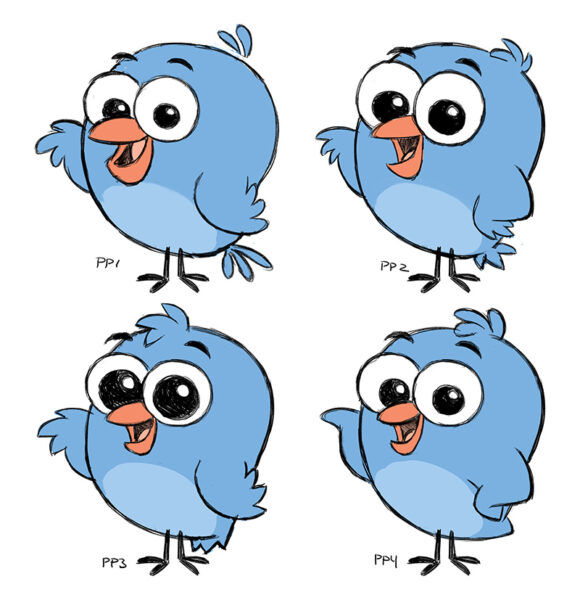
Once we find a direction you like, I’ll refine the strongest ideas and start tightening everything up. Based on your feedback I’ll work up a detailed sketch (or several sketches). I’ll do multiple rounds of revisions (if needed) to hone in on the right look and feel.
With the bluebird, I took notes from what the client liked and did some more sketches until we had something they liked, with a few slight variations:
Once the design is approved I’ll create the finished art. I usually build it as a vector file in Adobe Illustrator to give you maximum flexibility. That way the character can be easily exported in multiple formats and a variety of sizes without any loss of quality.
Here’s how the final bluebird turned out:
If you think a cartoon mascot might be the right choice for your business or for a client, please reach out to me or just fill out this questionnaire. It’s designed to help you think through your brand message and also to give me a clear idea of what your needs are so that I know the best way to help you.
Let’s talk! I’d love to help you create something fun.
We noticed you're visiting from Latvia. We've updated our prices to Euro for your shopping convenience. Use United States (US) dollar instead. Dismiss